EMDR
What is EMDR Therapy?
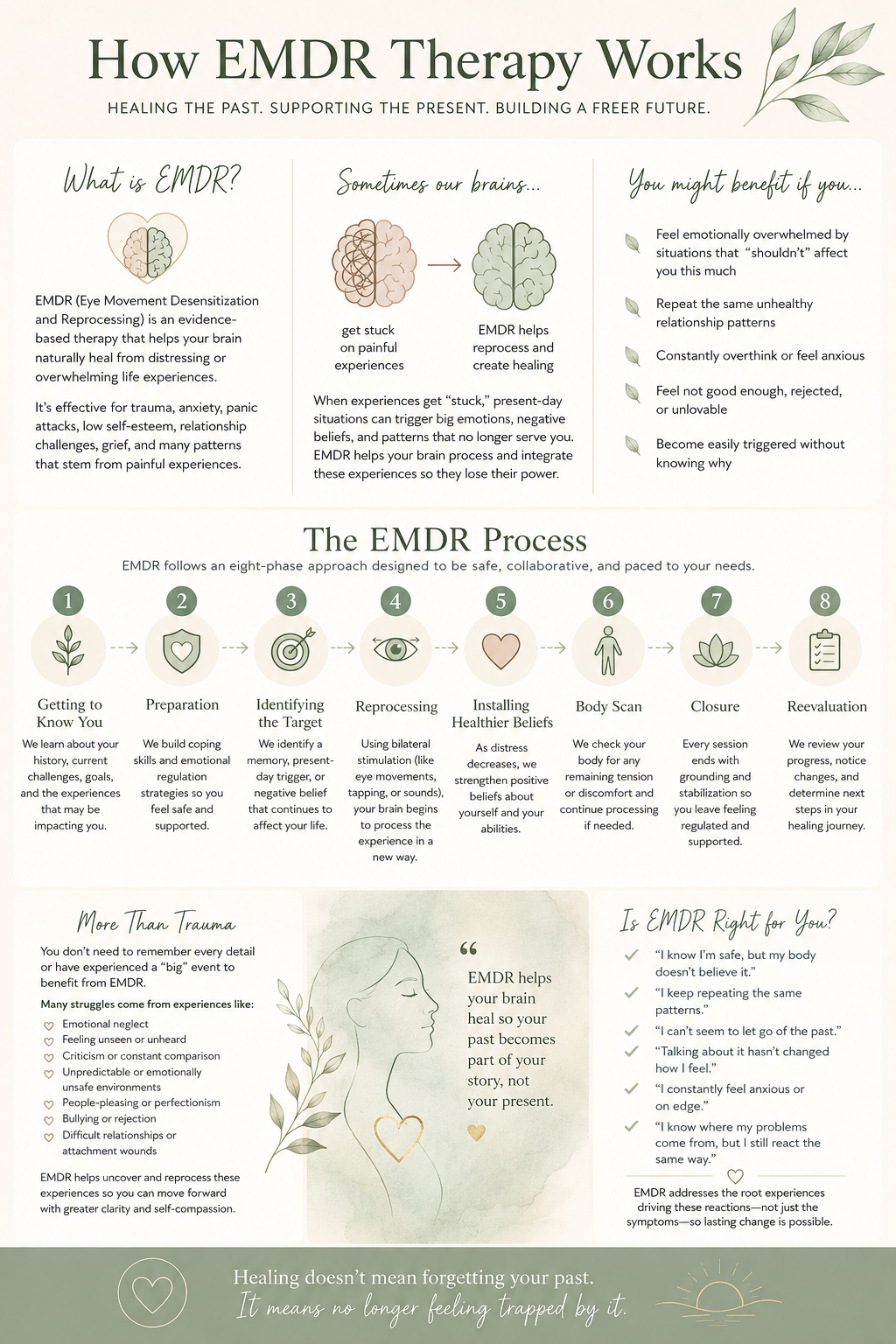
Eye Movement Desensitization and Reprocessing (EMDR) is an evidence-based psychotherapy that helps your brain naturally heal from distressing or overwhelming life experiences. While many people associate EMDR with treating trauma, it is also highly effective for anxiety, panic attacks, low self-esteem, relationship difficulties, grief, and many of the patterns that stem from painful life experiences.
Sometimes our brains are unable to fully process difficult experiences. Instead of becoming part of our life story, these experiences remain “stuck” in the nervous system. When this happens, present-day situations can unknowingly activate old emotions, body sensations, beliefs, and reactions that feel much bigger than the situation itself.
You may notice this as:
- Feeling emotionally overwhelmed by situations that "shouldn't" affect you this much
- Repeating the same unhealthy relationship patterns
- Constant overthinking or anxiety
- Feeling not good enough, rejected, or unlovable
- Becoming easily triggered without fully understanding why
EMDR helps your brain process these experiences so they no longer hold the same emotional intensity.

How Does EMDR Work?
Rather than simply talking about your experiences, EMDR helps your brain do what it was naturally designed to do—process and integrate memories.
During an EMDR session, you’ll briefly bring a distressing memory, feeling, or present-day trigger into awareness while engaging in bilateral stimulation, such as guided eye movements, gentle tapping, or alternating sounds. Bilateral stimulation activates both sides of the brain, supporting your brain’s natural information processing system.
As your brain begins to process the experience, new insights often emerge naturally. The emotional intensity decreases, negative beliefs begin to shift, and your nervous system learns that the experience is no longer happening in the present moment.
Many clients describe this process as finally feeling “unstuck.”
EMDR Is About More Than Trauma
You do not have to remember every detail of your childhood or have experienced a single traumatic event to benefit from EMDR.
Many of the struggles people experience today are connected to repeated experiences such as:
- Emotional neglect
- Feeling unseen or unheard
- Being criticized or compared to others
- Growing up in unpredictable or emotionally unsafe environments
- People-pleasing or perfectionism
- Bullying or rejection
- Difficult relationships or attachment wounds
What Happens During EMDR Therapy?
1. Getting to Know You
We begin by understanding your history, current challenges, goals, and identifying experiences that may be contributing to your present-day difficulties.
2. Preparation
Before beginning memory processing, we'll build emotional regulation skills and coping strategies so you feel confident managing difficult emotions both during and between sessions.
3. Identifying the Target
Together we'll identify a memory, present-day trigger, or negative belief that continues to impact your life today.
4. Reprocessing
Using bilateral stimulation, your brain begins processing the memory in a new way. You remain fully awake, aware, and in control throughout the session. Many clients notice thoughts, emotions, memories, or body sensations naturally shifting as the brain processes the experience.
5. Installing Healthier Beliefs
Replacing distress with empowering beliefs like: I am enough. I am safe. I am worthy. I can trust myself. I have choices now.
6. Body Scan
Because trauma is often stored in the body, we check for any remaining physical tension or discomfort and continue processing if needed.
7. Closure
Every session ends with grounding and stabilization to help you leave feeling regulated and supported, whether or not processing is complete.
8. Reevaluation
At the beginning of future sessions, we'll review your progress, assess lasting changes, and determine the next steps in your treatment.
Is EMDR Right for Me?
EMDR may be a good fit if you find yourself saying things like:
- I know logically I'm safe, but my body doesn't believe it.
- I keep repeating the same patterns.
- I can't seem to let go of the past.
- Talking about it hasn't changed how I feel.
- I constantly feel anxious or on edge.
- I know where my problems come from, but I still react the same way.
If this sounds familiar, EMDR may help address the underlying experiences driving these reactions rather than simply managing the symptoms.

What Does EMDR Feel Like?
Everyone’s experience is unique. Some people notice emotions becoming less intense over time. Others gain new perspectives, experience physical relief, or simply find that situations which once felt overwhelming no longer carry the same emotional weight.
The goal is not to erase memories or forget what happened. Instead, EMDR helps your brain store those experiences in a healthier way so they become part of your story—not something that continues to control your present.
Healing doesn’t mean forgetting your past. It means no longer feeling trapped by it.